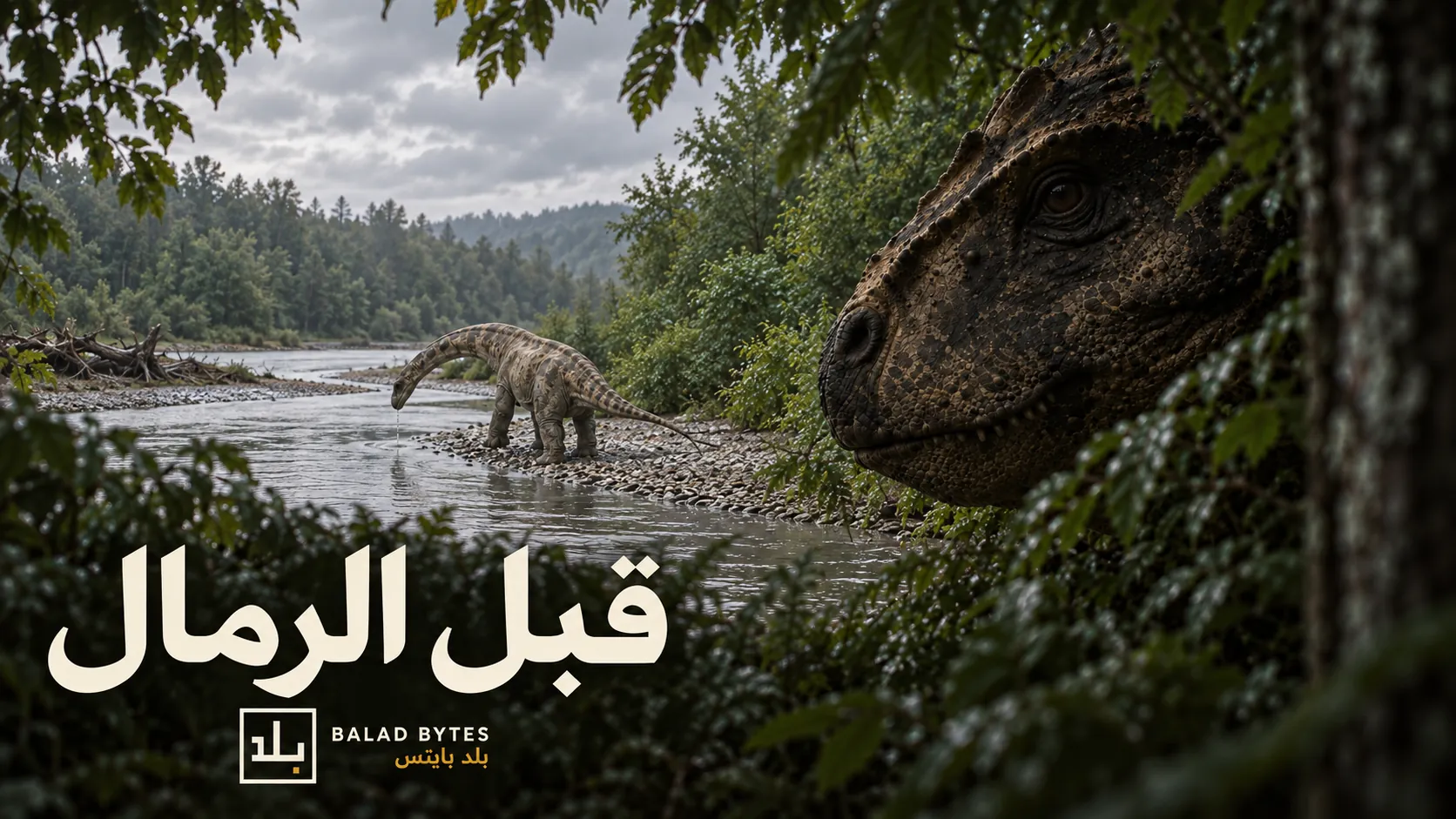
Before the Sands poster

Before the Sands

Science documentaryFootage from the documentary

Before it was desert, it was a coast. And it had other inhabitants

Scientific reconstructionEvery scene in this work is an AI reconstruction based on a published study, and is reviewed by a specialist before the final release.

At the end of 2013, researchers from the Saudi Geological Survey and international colleagues published the first classifiable dinosaur remains on the Arabian Peninsula: tail vertebrae of a giant long-necked titanosaur, and teeth of an abelisaurid predator. They were found in the Adaffa Formation near Al-Khuraybah in the Midyan region in the north-west of the Kingdom, and are around 72 to 75 million years old.

Back then this land was not desert, but a coast on an ancient sea.

Before the Sands is a documentary that rebuilds that coast and those who walked it, starting from the bones themselves: how big was the animal that left them, how did it move, what hunted it, and why did it all end.

A work that starts from published scientific evidence and ends with a scene no one has ever seen.

Type
Science documentary
Length
About 10 minutes
Chapters
Seven
Status
In production
Access
Subtitles, audio description and sign language (planned)

Request something like this

Chapters of the film

A journey from today’s sands to a coast seventy-two million years ago, and back.

The full film is in production. These are its chapters; durations are approximate.

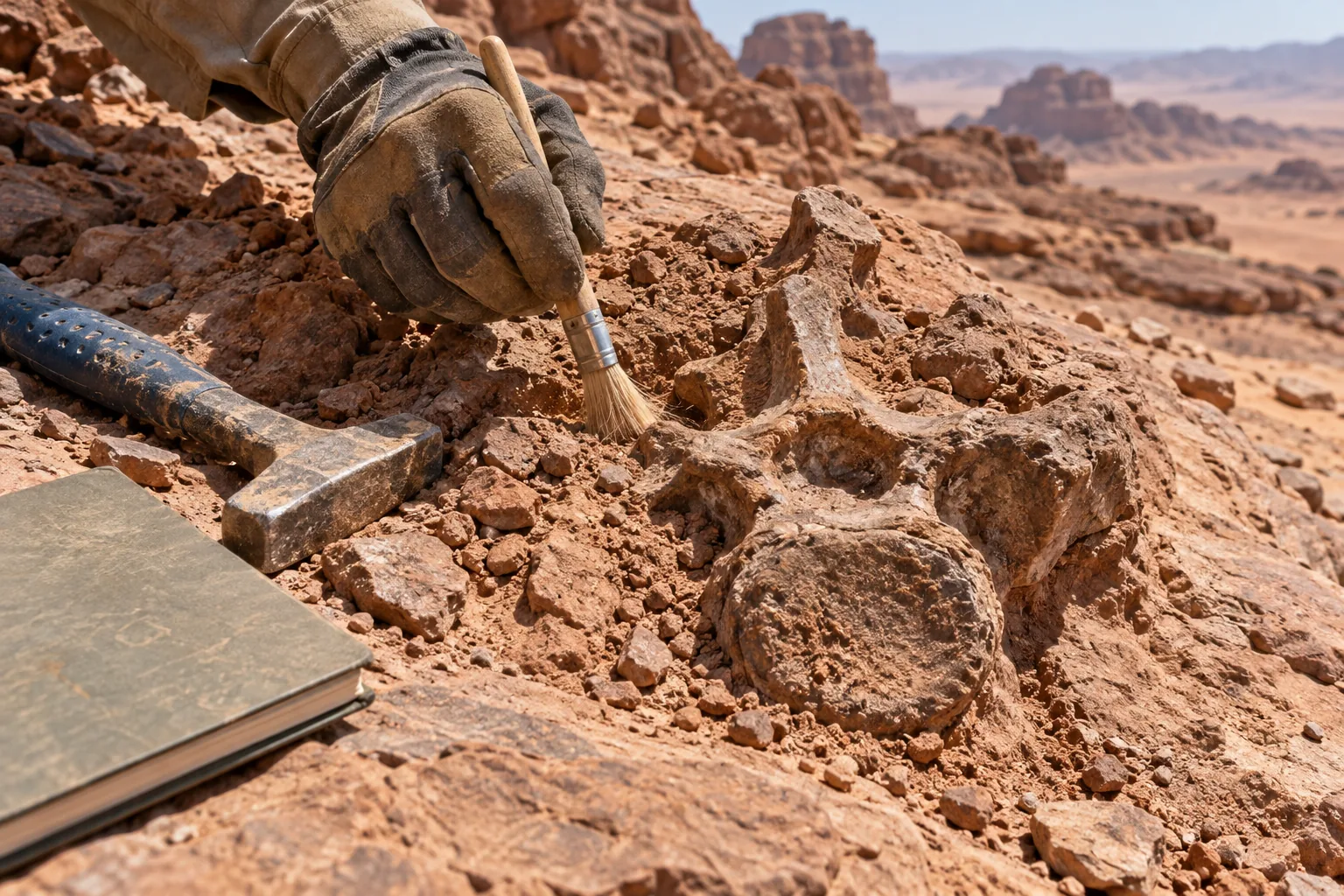
A gloved hand brushing a fossil dinosaur vertebra in red sandstone

Today, middayMidyan, near Al-Khuraybah1:00

The sands

Sandstone carved by the wind, and a brush uncovering a fossil vertebra. This is where it all begins.

FactIn 2013 the first classifiable dinosaur remains from the Arabian Peninsula were published, from the Adaffa Formation about 11 km north-east of Al-Khuraybah.

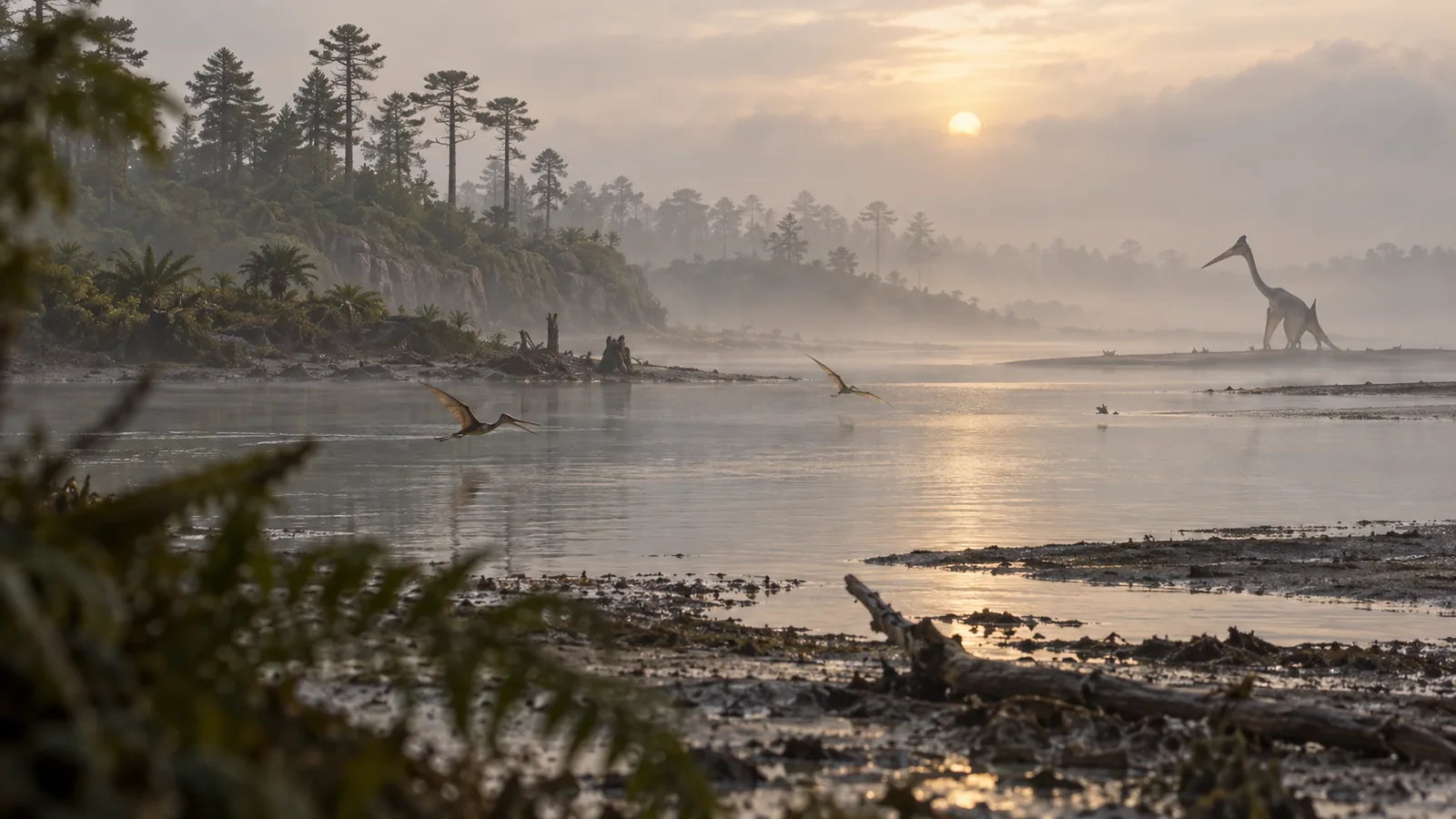
A misty estuary at dawn, pterosaurs over the water, a giant pterosaur on a sandbar

72 million years ago, dawnAn estuary on the Tethys Ocean1:30

The ancient coast

The picture goes back seventy-two million years: mist over an estuary, ancient conifers, and flying reptiles skimming the water.

FactArabia was still joined to Africa, with the Tethys Ocean to its east. In neighbouring Jordan, remains of a giant flying reptile from the same age have been found.

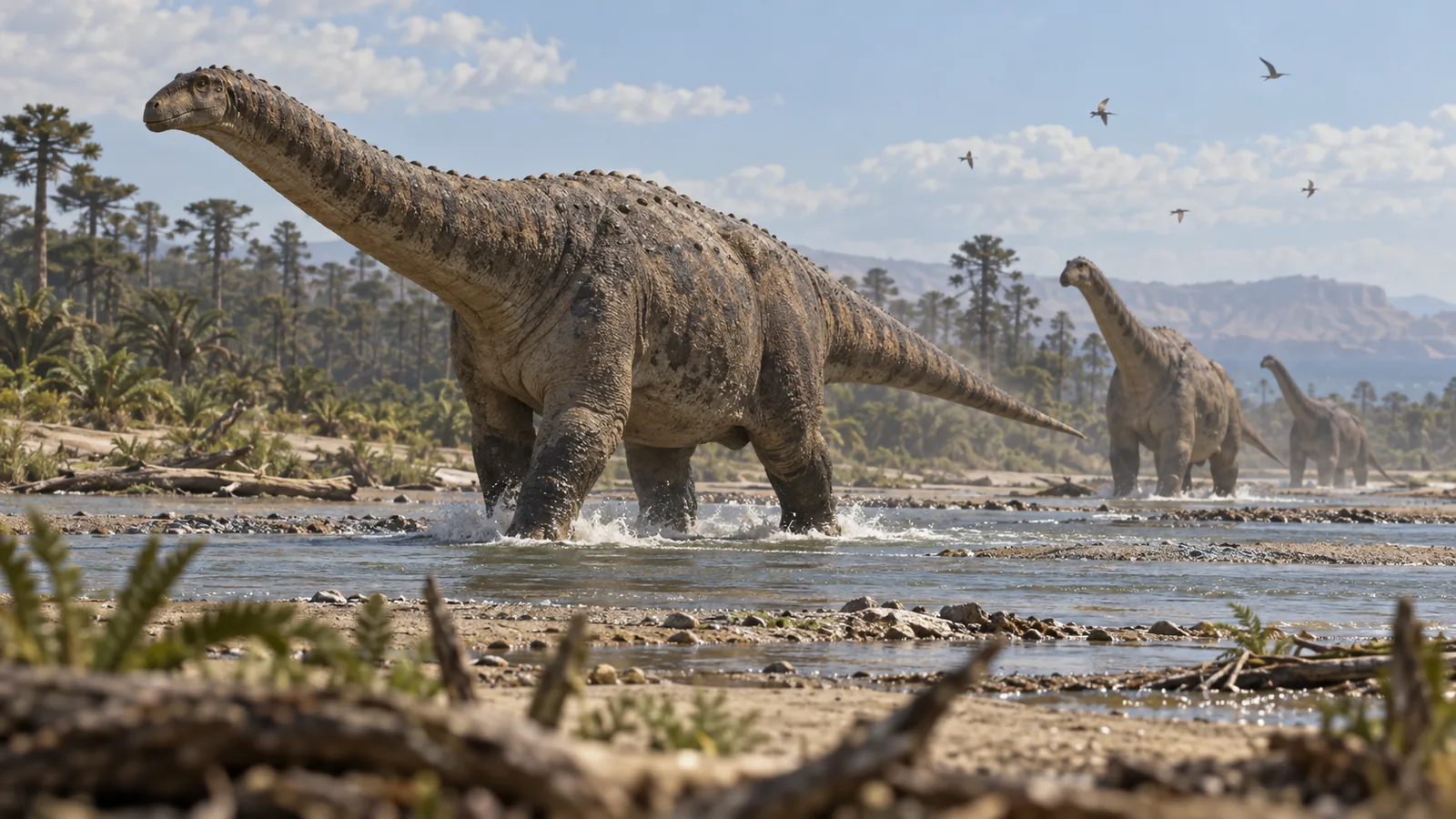
A herd of titanosaurs crossing a shallow river in daylight

DaytimeA river plain1:40

The giant

A herd of titanosaurs crosses a shallow river, the ground shaking under their steps.

FactThe vertebrae belong to a titanosaur, a group whose members could reach about twenty metres in length.

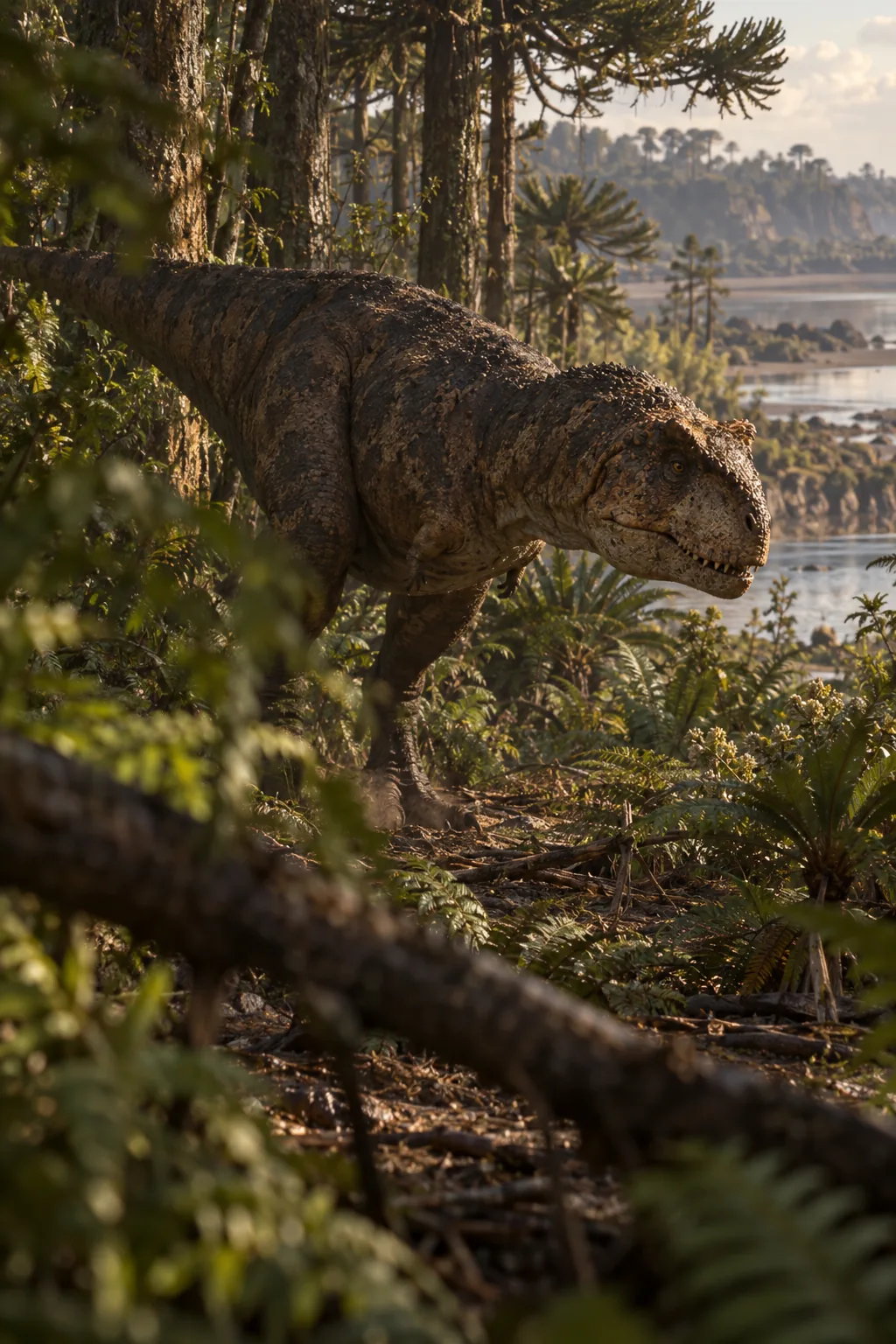
An abelisaurid predator stepping through ferns in a riverside forest

AfternoonA riverside forest1:30

The hunter

Through the ferns comes a short-headed predator with tiny arms, its eyes on the herd.

FactTwo teeth were found from an abelisaurid, a family known for short, deep skulls and very small forelimbs.

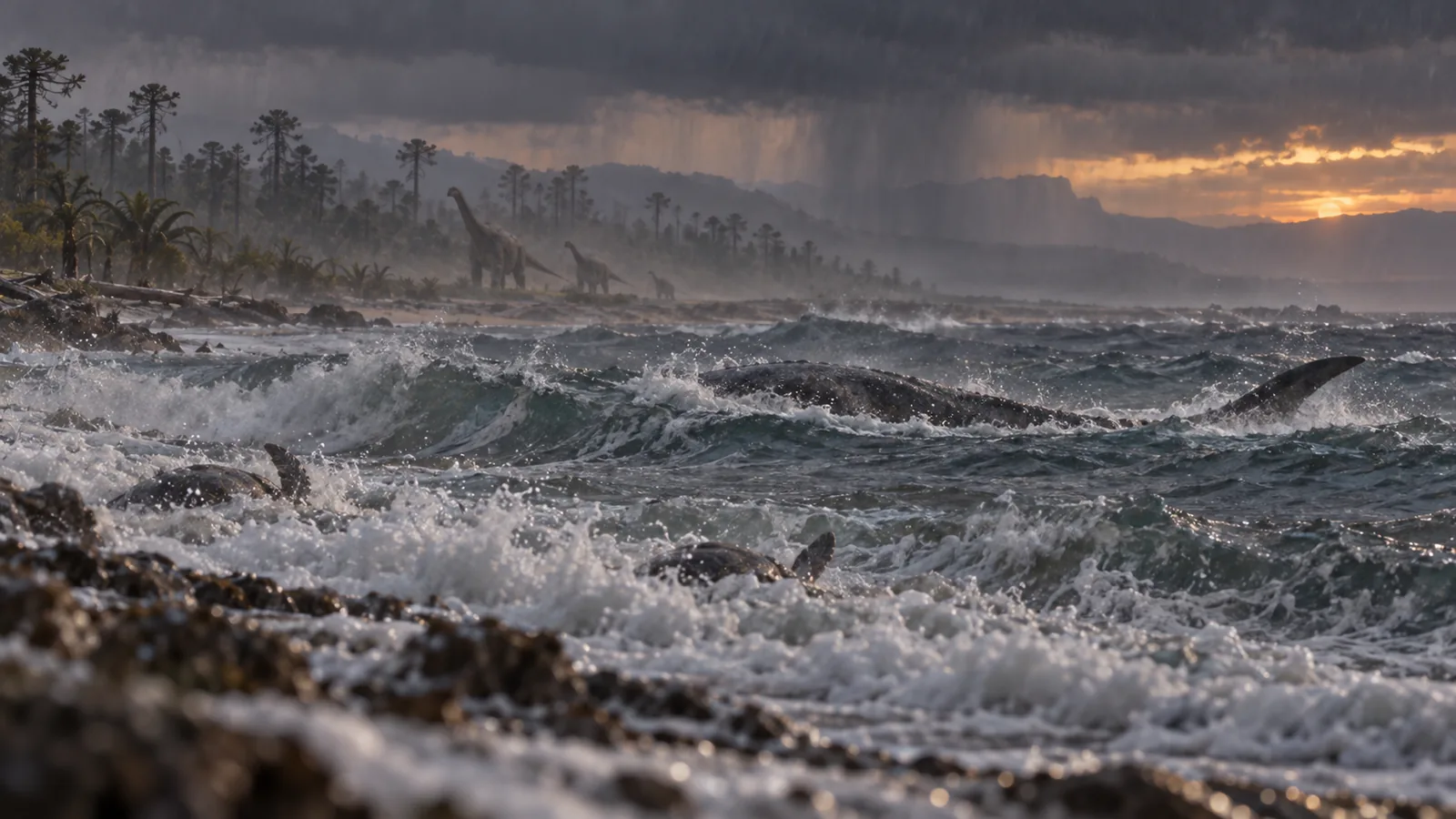
A stormy sea at sunset, a mosasaur’s back in the waves, sea turtles, distant titanosaurs on the shore

SunsetThe coast1:20

The storm

A storm at sunset and a raging sea. In the waves, the back of a huge marine reptile, and turtles tossed by the surf.

FactRocks of the same age in the region have yielded plesiosaurs, mosasaurs, sharks and turtles.

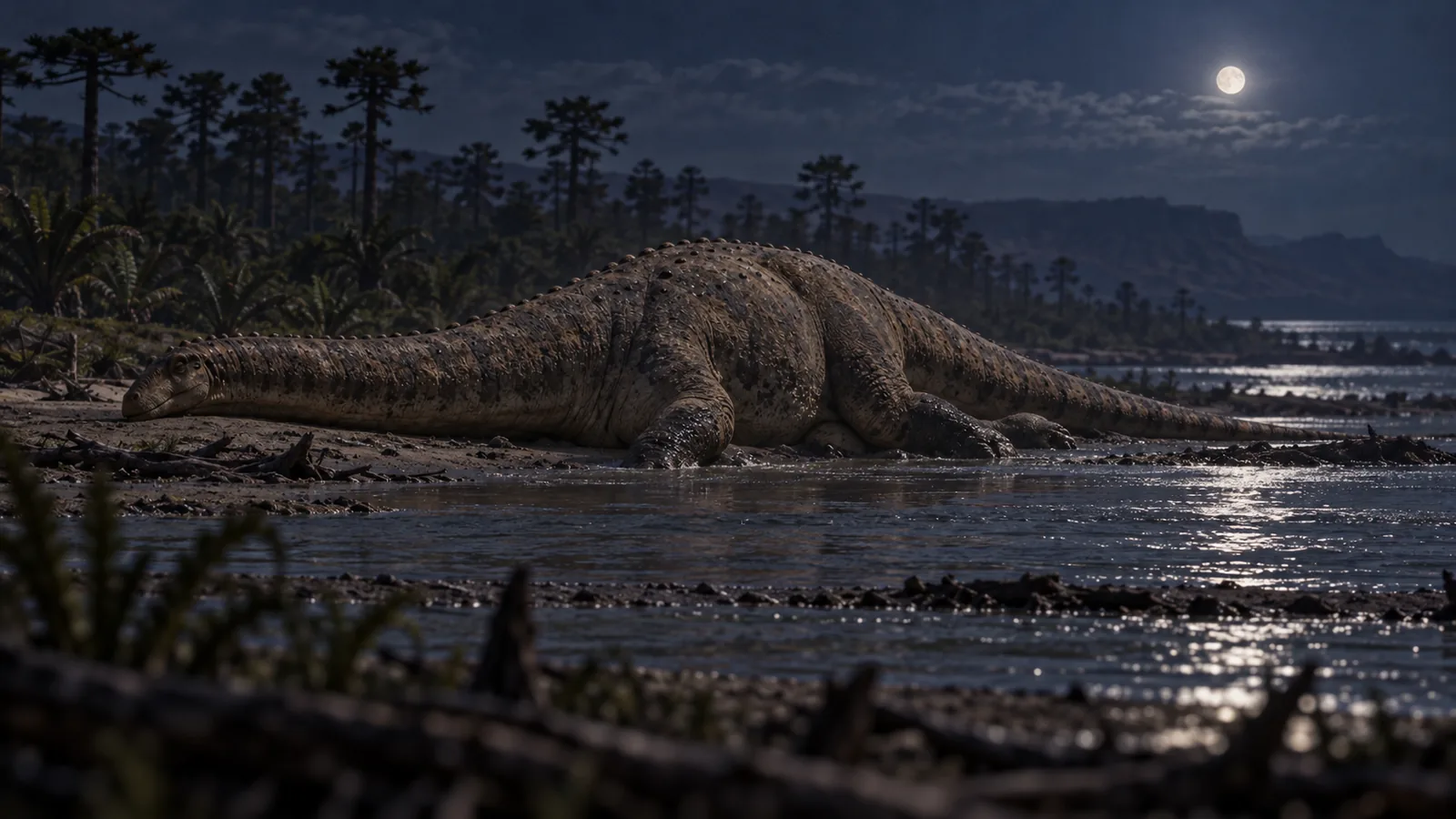
An old titanosaur lying on a muddy riverbank under moonlight

NightThe riverbank1:30

Night at the estuary

Under the moon, an old titanosaur lies on the muddy bank at the end of its days, as the river slowly covers it in silt.

FactThe sediments that preserved these bones were laid down by streams and rivers.

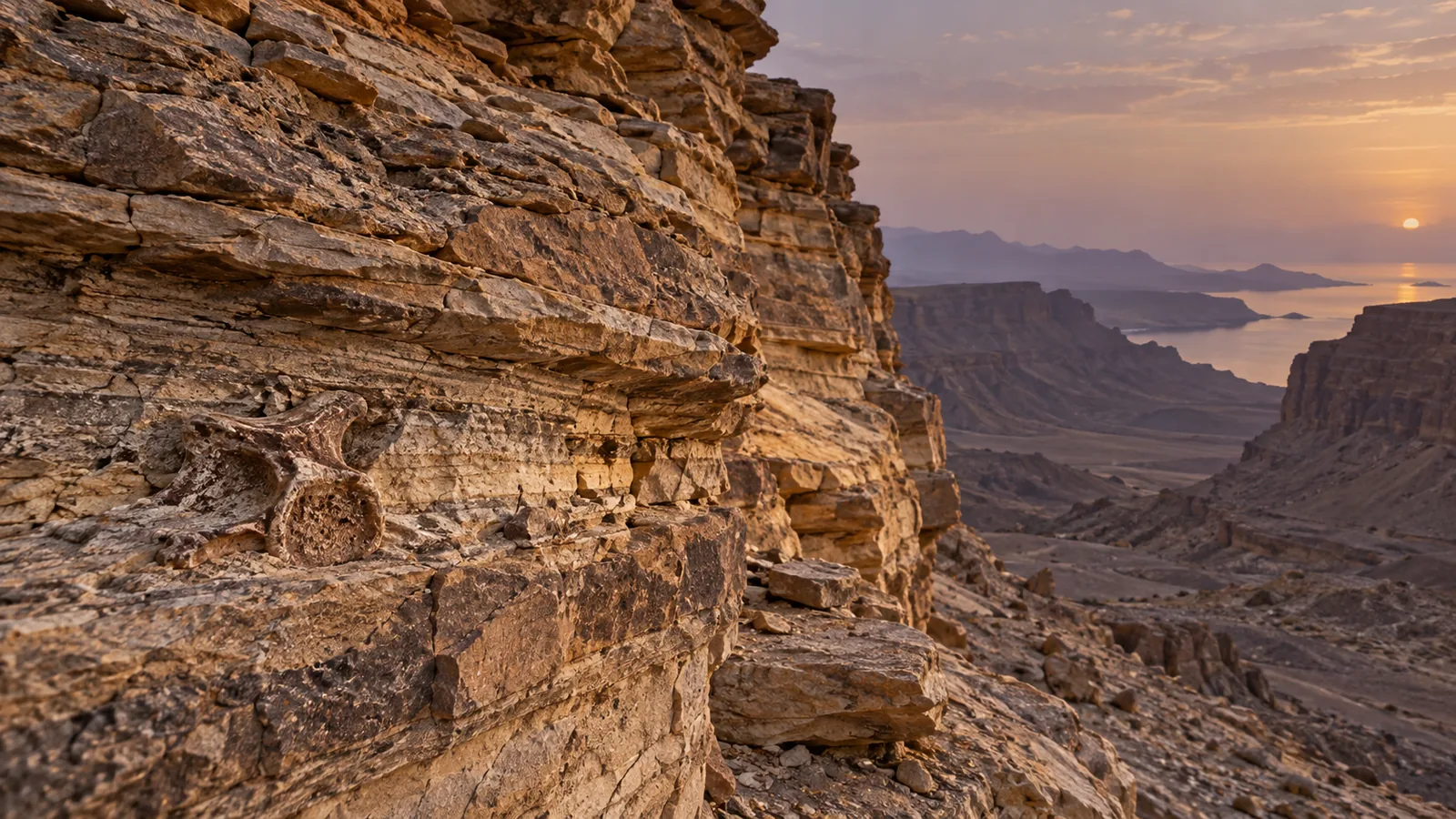
A layered sandstone cliff at dusk with a fossil vertebra inside one layer, the Red Sea on the horizon

Millions of years, then todayMidyan1:40

Who reads the stone

Millions of years in a minute: the sea retreats, layers pile up, and the sands advance. Then we return to the same brush and ask: what is still under the sand?

FactToday the Adaffa Formation lies near the Red Sea, a sea that did not yet exist when these dinosaurs lived.

Discovery card

Site
Adaffa Formation, about 11 km north-east of Al-Khuraybah, Midyan region
Age
About 72 million years, Late Cretaceous
What was found
Tail vertebrae of a titanosaur, and two teeth of an abelisaurid
Published
Kear et al., PLOS ONE, 2013
Why it matters
The first classifiable dinosaurs from the Arabian Peninsula

How big?

05 m10 m15 m20 m25 m30 mTitanosaur, about 20 mAbelisaurid, 6–7 mPerson, 1.75 m
Lengths are estimates based on the closest known relatives.

Interactive

What’s under the sand?

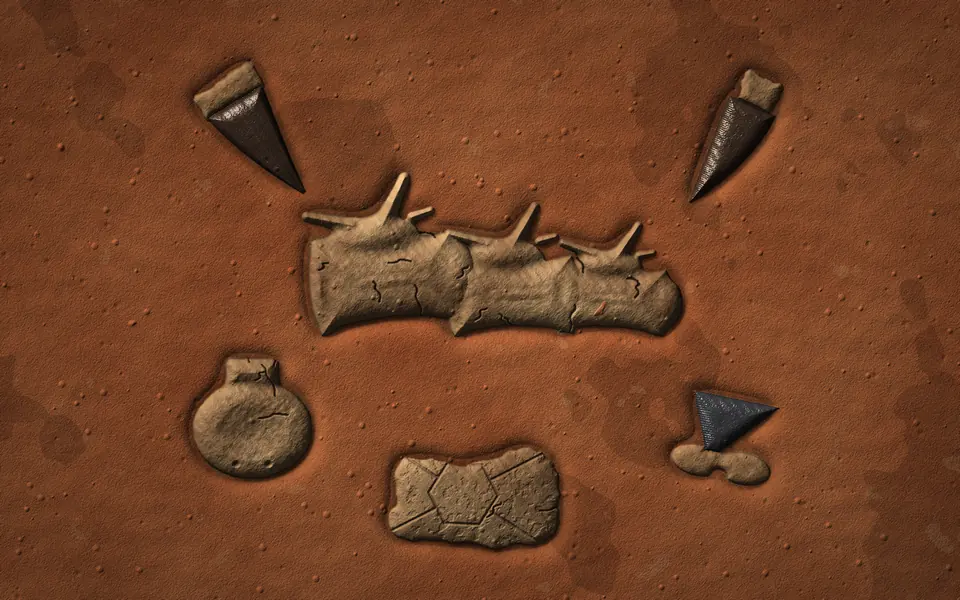
You have a brush, and under the sand lie six pieces of a coast that lived about 75 million years ago. Clear the sand gently, read what you find the way palaeontologists do, then bring it back to life.

Dig site · Adaffa Formation, near Al-Khuraybah

Under this sand lie six pieces of an ancient coast.

Drag with your mouse or finger to sweep the sand away.

Field notebook

    The pieces in the dig are illustrations of the kinds of remains recorded in the Adaffa Formation by Kear and colleagues (PLOS ONE, 2013), not photographs of the bones themselves; the living scenes are stills from the film.

    Before the sands, in Arab scientific heritage

    A thousand years ago, Arab and Muslim scholars read the rocks before us

    Reading stone did not begin with modern fossil digs. Scholars of our civilisation noticed that the face of the earth changes, and that the sea once lay where there is land today.

    ابن سينا

    Ibn Sina

    He saw sea shells high in the mountains, and traces of old shorelines and dried rivers, and took them as evidence that the earth changes slowly over time.

    البيروني

    Al-Biruni

    He found stones that, when broken, held shells inside, and took them as evidence that the land of the Arabs was once a sea.

    The film’s glossary

    Dinosaur
    From Greek, “terrible lizard”.
    Titanosaur
    “Titan lizard”, after the giants of Greek myth.
    Abelisaurid
    Named in honour of Roberto Abel, an Argentine museum director linked to the first find of this family.
    Mosasaur
    “Meuse lizard”, after the river in the Netherlands near which the first remains were found.
    Tethys Ocean
    An ancient ocean named after a sea goddess of Greek myth. Arabia lay on its shore.
    Adaffa Formation
    Sedimentary rock layers in north-west Saudi Arabia, where the film’s bones came from.
    Cretaceous
    The last age of the dinosaurs, which ended about 66 million years ago.

    Sources: Ibn Sina, al-Biruni, and the Golden Age of Islamic Geoscience.

    From bone to scene

    How we rebuild an animal no one has ever seen, without inventing it.

    1. The published studyWe start from what science has published: which bones, where, and how old.
    2. Known relativesSize and shape come from the closest species found elsewhere in the world.
    3. The sceneWe build the setting and the animal with AI, and label every shot as such.
    4. The reviewA specialist reviews the science before the final release.

    Shots from the work

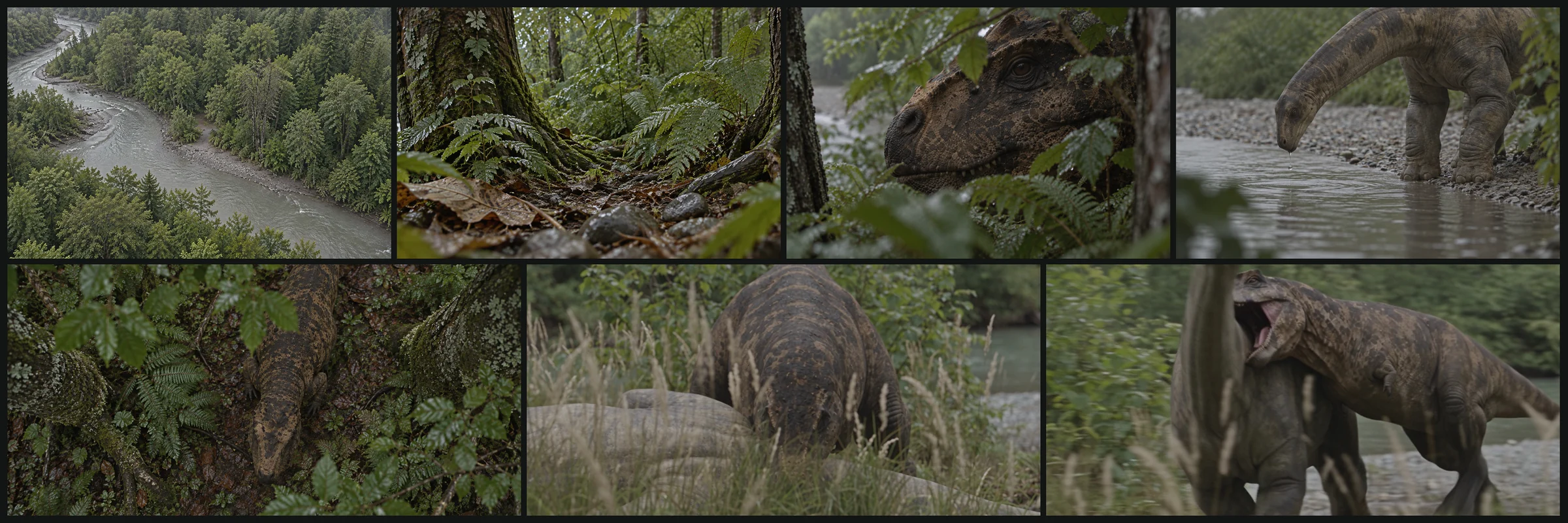
    Shot sheet from Before the Sands
    Watch footage from the documentary at the top of the page.

    Upcoming episodes in the series

    The Sharks of Khurais poster
    The Sharks of KhuraisProposed episode
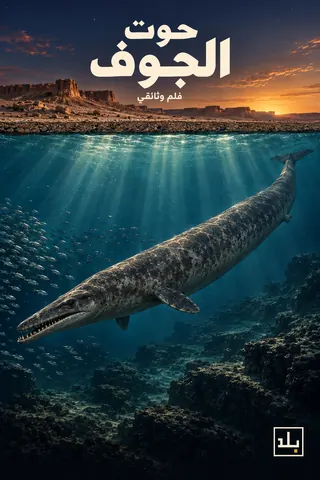
    The Whale of Al-Jouf poster
    The Whale of Al-JoufProposed episode
    Origin cardWhere did this work come from?

    Have a place, a product or a story?

    Tell us in two lines. We'll send you an idea and a quote within 48 hours.